
A lesson from the consequences of the Iraq War for foreign policy
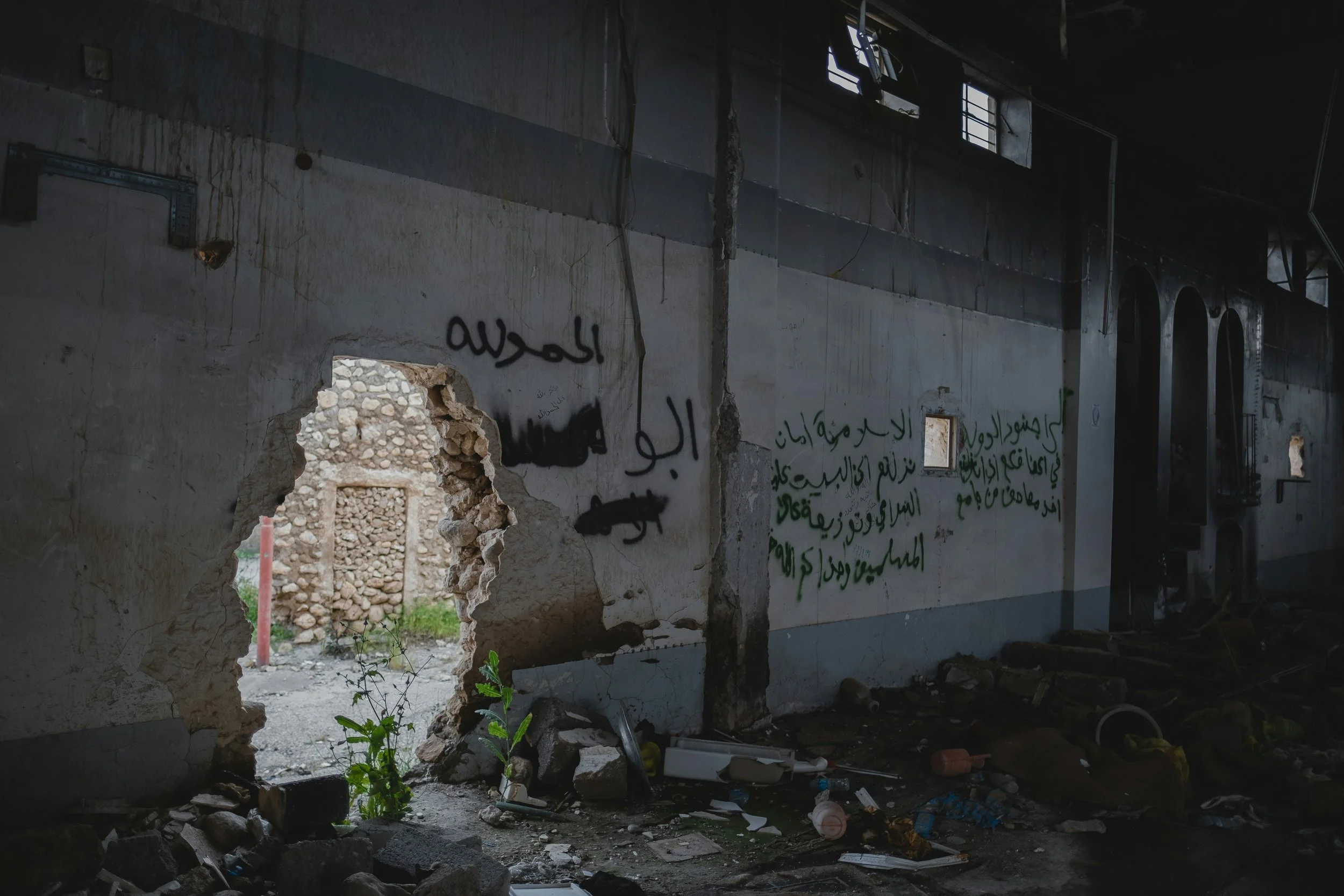
“One of their enemy devils was right in saying that if Afghanistan was the School for Terrorism, then Iraq is the University of Terrorism.”
This infamous quote from Abu Omar al-Baghdadi, the 1st Emir of the Islamic State of Iraq, encapsulates the role Iraq played in spurring terrorist movements in the Middle East, a condition directly ushered in by the Iraq War. Although the invasion of Iraq by the United States and its allies in March 2003 was initially successful in overthrowing Saddam Hussein's regime, with President George W. Bush declaring victory on 1 May, negligence and mishandling during the post-invasion phase resulted in the US’s eventual defeat. Indeed, the US began a state-building mission in Iraq without considering Iraq’s realities. The lack of realistic preparation for the postwar environment and incorrect judgments made by successive American administrations bred instability in the country rather than creating the envisioned vibrant democratic society. This predicament sprung from Iraq’s sectarian tensions between a Shia Muslim majority, making up about 60% of the population, and a Sunni Muslim minority, accounting for around 32% of the population. Although Shias constitute the dominant religious group in Iraq, they were largely excluded from political life under Saddam Hussein's rule. The Sunni-dominated Baath Party severely repressed Shia Muslims, contributing to their deep anger and discontent with the ruling minority. Consequently, while the US had invaded Iraq as part of its Global War on Terror, seeking to destroy “al Qaeda [and] every terrorist group of global reach,”the Iraq War gave rise to unrest and violence that made possible the growth of terrorist organizations in the country, previously held in check under Saddam Hussein. Ultimately, Iraq became the epicenter of terrorism, causing the dismal failure of the War on Terror. In this respect, the war in Iraq offers an important lesson in foreign policy: regime change cannot inspire stability without a realistic follow-up strategy.
Following the tentative military victory, the US established the Coalition Provisional Authority (CPA), acting as a transitional government of Iraq, and immediately sought the complete dissolution of the previous regime and its political institutions. CPA Order 1, known as the "De-Baathification of Iraqi Society," dismantled the Ba'ath Party and purged the Iraqi government of its members to prevent Saddam Hussein's Baathists from regaining power. Nevertheless, as the only political party in existence under Saddam, the Baath Party had encompassed a substantial portion of Iraqi society, with membership becoming crucial to securing access to public sector work. As a result, the De-Baathification order alienated a substantial segment of Iraqi society, driving them into unemployment and excluding them from Iraqi reconstruction efforts. Moreover, it caused the Iraqi government to stall, interrupting funding, revenues, and public services indispensable for Iraqi reconstruction. CPA Order 2, titled “Dissolution of Entities,” disbanded all defense-related entities within the Iraqi government in order to prevent threats to the new government from military forces loyal to Saddam Hussein’s regime. This decision eliminated the institutions that provided security to Iraqis and left 400,000 armed men unemployed, dissatisfied with American actions and desperate for some income. In addition to these two misguided orders, the advisory and interim Iraqi governance bodies established by the CPA were primarily composed of Iraqi exiles from Ba'athist Iraq lacking domestic political constituency and legitimacy. The appointment to these organizations reflected roughly Iraqi ethnic and sectarian demography, which instilled sectarian identity in Iraq's political system and deepened political divisions. This position was exacerbated by the first Iraqi government after the 2005 elections, led by Nouri al-Maliki, a Shia Muslim with limited experience and knowledge of the contemporary Iraqi society due to his 24-year exile in Iran.
These conditions generated anti-Coalition sentiments among the disenfranchised population, which erupted into an outright insurgency in August 2003, which provided an opportunity for al-Qaeda to gain a foothold in the country. Although a White House report published in 2003 stated that the US had uprooted al-Qaeda from Afghanistan, the Iraq war allowed its members to regroup and reorganize. Al-Qaida in Iraq (AQI) appeared in 2004, commanded by Al-Zarqawi, whom Bin Laden endorsed as his emissary. The group declared a jihad (struggle) against an infidel invasion of an Arab Muslim land, calling on all Muslims to fight in Iraq, drawing a parallel with the invasion of the Abbasid Caliphate in Baghdad by the Mongols in the 13th century. Foreign terrorists poured into Iraq through its unsecured borders, creating a new center of jihad.
AQI exploited communal violence between Shia and Sunni Muslims to favor recruitment, fomenting a sectarian war between the communities of the two branches of Islam. This is made explicit in a letter to Bin Laden in 2004, where Al-Zarqawi explains that “the only solution is for us to strike the religious, military, and other cadres among the Shia with blow after blow until they bend to the Sunnis. […] If we succeed in dragging them into the arena of sectarian war, it will become possible to awaken the inattentive Sunnis as they feel imminent danger and annihilating death at the hands of these Sabeans.” In February 2006, AQI bombed the Al-Askari Mosque in Samarra as a symbolic attack on Shia Muslims. The tragedy sparked a full-blown civil war in Iraq between the Sunni and Shia populations, with Iraqis turning to sectarian militias for security due to the government's failure to provide safety. The ensuing sectarian conflict caused the deaths of tens of thousands of civilians and the internal displacement of hundreds of thousands of Iraqis.
The country became a fertile ground for global terrorism. A 2006 National Intelligence report explained that “the Iraq conflict has become the ‘cause celebre’ for jihadists, breeding a deep resentment of US involvement in the Muslim world and cultivating supporters for the global jihadist movement.” The war resulted in a staggering sevenfold increase in the annual rate of lethal terrorist assaults in Iraq and around the world. By the end of 2006, AQI controlled vast expanses of territories throughout Iraq, in which Sunni communities sought protection. After the US military eliminated Zarqawi in June 2006, Abu Omar al-Baghdadi became the AQI’s new Emir, who subsequently rebranded the group as the Islamic State of Iraq (ISI).
However, the first Islamic state project largely failed. Sunni Muslims grew disillusioned with AQI, which used indiscriminate violence on Iraqis. The Sunnis were also being expelled from Baghdad through sectarian cleansing despite AQI’s terror campaign. In parallel, the US changed its attitude toward the Sunnis, recognizing the mistakes of the de-Ba’athification laws. The US Army began cooperating with Abdul Sattar, a high-profile Iraqi tribal sheik, to secure Sunni areas. The incipient success in joining forces against AQI led Abdul Sattar to declare the “Awakening” in September 2006, forming a coalition between local Sunni tribal leaders sponsored by the US military against AQI. The success of the “Awakening” gave momentum for US-led Sons of Iraq, which expanded the coalition into other Sunni areas. Coupled with the US troop surge of 2007, these dynamics allowed the US to drive AQI out of the sanctuaries of Baghdad and its environs. Subsequent operations confined AQI to Mosul.[26] After this provisional success, the US began handing over responsibility over security to Iraqi security forces in 2009.
By 2010, ISI appeared largely defeated, losing most of its territories and its Emir, whom Abu Bakr al-Baghdadi replaced. However, four key factors contributed to its re-emergence: (1) The group underwent an organizational re-structuring and military rebuilding, driven by a re-articulation of its ideology that called for the overthrow of illegitimate governments and the creation of a Caliphate. (2) The Syrian Civil War’s outbreak in March 2011 allowed ISI to expand into Syria, exploiting the division between Syria's Sunni majority and the Shia Alawite in power under the regime of Bashar al-Assad. (3) The execution of Osama bin Laden in May 2011 by US troops and his replacement by Ayman al-Zawahiri led to Al-Qaeda’s decline in influence, struggling to control its affiliates and maintain leadership legitimacy. (4) Following the withdrawal of US troops in December 2011, the al-Maliki government began marginalizing the Sunnis politically and purging them from the military out of fear of being challenged. The Iraqi state's dysfunctional nature and escalating confrontation with the Sunni people fostered support for the ISI's ideological objectives.
These developments paved the way for ISI to consolidate its hold over vast swathes of territory straddling the Syrian-Iraqi border. The rise of ISI prompted Abu Bakr al-Baghdadi to rename the Salafi jihadist organization as the “Islamic State of Iraq and the Levant” (ISIL) in April 2013. Al-Qaeda’s Emir Ayman al-Zawahiri fiercely opposed the announcement and ordered the withdrawal of ISI from Syria, directing them to operate only in Iraq. After an eight-month power struggle, Al-Qaida disavowed any links with ISIL in February 2014.
In June 2014, ISIL caught most of the world by surprise when it entered Mosul, Iraq’s second-largest city. A month later, Al-Baghdadi proclaimed a new caliphate, establishing the Islamic State in territory roughly the size of Britain on the Iraq-Syria border. At its height, the Islamic State ruled over territories spanning northern and western Iraq and eastern and northern Syria, a hundred times larger than any territory al-Qaeda had ever controlled. The UN Security Council soon recognized the Caliphate’s unconstrained spread as “a global and unprecedented threat to international peace and security.” It rapidly expanded its campaign across the Middle East and North Africa, consuming Washington’s and the world’s attention like few if any international security threats. The Islamic State was described as one of the most significant security challenges the US has ever faced. Thus, by invading Iraq to stifle the spread of global terrorism, the US ended up engendering a much greater threat to its national security and that of the region.
Conclusion
Despite initial hopes that the invasion of Iraq and the overthrow of Saddam Hussein would usher in a stable democracy, the country quickly descended into turmoil. The United States won a decisive military victory early in the invasion. However, efforts at political reconstruction proved far more complex. A confluence of poor decision-making and misguided planning resulting from a neglect of local realities doomed American efforts from the start. With much of Iraqi society alienated and state institutions collapsing, hostility toward American forces morphed into protracted insurgencies that aligned with nascent terrorist organizations. Al-Qaeda emerged in war-torn Iraq, the very group the United States sought to destroy in its War on Terror. Sowing chaos in Iraq by stoking the Sunni-Shia divide that the US had already stirred up, al-Qaeda in Iraq consolidated its grip and transformed Iraq into an epicenter of terrorism. The rise of terrorism culminated in the creation of the Islamic State, which threatened the stability of the entire Middle East by claiming a global caliphate. The Islamic State became a far more formidable threat than al-Qaeda, operating as a quasi-state spanning Syria and Iraq. The United States found itself in a much worse situation, dragging the entire international community down with it. The Iraq War is thus an ever-present reminder that short-sighted strategies in a region as complex as the Middle East can have far-reaching consequences.
It is imperative to learn the lessons of the Iraq War today. Without a clear strategy in mind, the Trump administration's regime-change ambitions, from Venezuela to Iran, risk repeating the mistakes of the Bush administration in Iraq. Such a short-sighted approach could place the United States in a far more precarious position and exposing it to a new security crisis. Regime change must therefore be viewed as a first step in a long-term strategy, not as an end in itself that would automatically guarantee a favorable environment for Washington.