
Internationalization Standards of Agrochemicals: Benefit or Problem? Challenges of an international legislation

Source: Periódico el Dinero
Modern agriculture depends on agrochemicals, but their use harms health and the environment. This article analyzes international standards for agrochemicals, examining key instruments like the Rotterdam and Stockholm Conventions and Codex Alimentarius. It identifies obstacles: fragmented institutions, capacity gaps between developed and developing countries, and industry influence. The study proposes solutions including stronger coordination, independent science, economic incentives, and a shift toward agroecological models that reduce dependence on hazardous inputs.
The global food system relies heavily on agrochemicals. Since the Green Revolution, pesticides and synthetic fertilizers have dramatically increased crop yields, feeding a growing population. However, this dependence carries serious consequences: contaminated soils and water, biodiversity loss, pest resistance, and human health risks ranging from acute poisoning to cancer.
These transboundary impacts demand a coordinated global response. Yet developing effective international standards faces major obstacles: fragmented institutions, capacity gaps between developed and developing countries, and the influence of economic interests. We look further into global governance of agrochemicals, analyzing key international instruments and proposing pathways toward more robust, equitable regulation aligned with the precautionary principle.
Foundational problem
Agrochemicals (pesticides, herbicides, fungicides, and synthetic fertilizers) are the foundation of modern intensive agriculture. Since the Green Revolution, they have dramatically increased crop yields to feed a growing global population.
However, this dependence has a dark side. Negative impacts include acute poisoning and chronic diseases (like cancer) in humans; soil and water contamination; biodiversity loss; and pest resistance. These problems do not respect national borders.
This tension between productivity and risk creates a major challenge: how to regulate substances that are both crucial and dangerous? Developing international standards faces obstacles including competing economic interests, gaps between countries, scientific disputes, and fragmented institutions.
Regulatory panorama
Unlike climate change, which has a central treaty framework (UNFCCC), agrochemical governance is scattered across multiple organizations with sometimes contradictory mandates. Between the ones with more international political weight, we can mention the following:
FAO and WHO: These UN agencies are central. Through the International Code of Conduct on Pesticide Management (1985, revised several times), they establish voluntary principles. Their Joint Meeting on Pesticide Residues (JMPR) sets Maximum Residue Limits (MRLs) for internationally traded food. These MRLs are adopted by the Codex Alimentarius and carry great weight at the WTO.
Rotterdam Convention (1998): Administered by FAO and UNEP. It does not ban products but creates transparency. Importing countries receive information about hazardous pesticides banned elsewhere and can decide whether to accept imports. Limitation: listing substances is slow and politicized.
Stockholm Convention (2001): Administered by UNEP. This is a prohibition and elimination treaty. It requires parties to eliminate Persistent Organic Pollutants (POPs) like DDT and endosulfan. Listing an agrochemical here is the strictest possible international measure.
World Trade Organization (WTO): Through the Sanitary and Phytosanitary (SPS) Agreement, the WTO exerts enormous influence. Countries can set science-based food safety standards, but if a country wants stricter MRLs than Codex, it must scientifically justify them or face a trade dispute. This creates tension between the "precautionary principle" (favored by the EU) and the "science-based risk approach" (favored by major agricultural exporters).
Many regulations in practice
Agricultural exporting countries such as Brazil, Argentina, and the United States resist stricter standards that could raise costs, arguing that decisions must rest solely on solid science, while the European Union pushes for the precautionary principle. Many developing countries lack labs, experts, and resources to assess risks, making them dependent on industry or Codex standards and vulnerable to a double standard where products restricted in the North continue to be used in the South. The agrochemical industry also wields enormous economic and lobbying power, raising real concerns about regulatory capture, with the glyphosate debate serving as a paradigmatic example. Finally, banning an agrochemical without offering affordable alternatives such as integrated pest management or resistant seeds creates social and economic resistance, especially among small farmers.
The world's most used herbicide, glyphosate, illustrates how scientific disagreement blocks international harmonization: the IARC (WHO) classified it as "probably carcinogenic," while the EFSA (EU) and EPA (US) concluded otherwise, and as a result, it has been banned in several EU countries but remains widely authorized in the US, Brazil, and Argentina, leaving no harmonized international standard. In contrast, endosulfan represents a relative success story, as this highly toxic insecticide was banned in over 80 countries and, despite facing years of negotiations and resistance from producing countries, was finally listed in the Stockholm Convention in 2011 for global phase-out, demonstrating that stricter conventions can eventually overcome resistance.
A practical case between practical partners
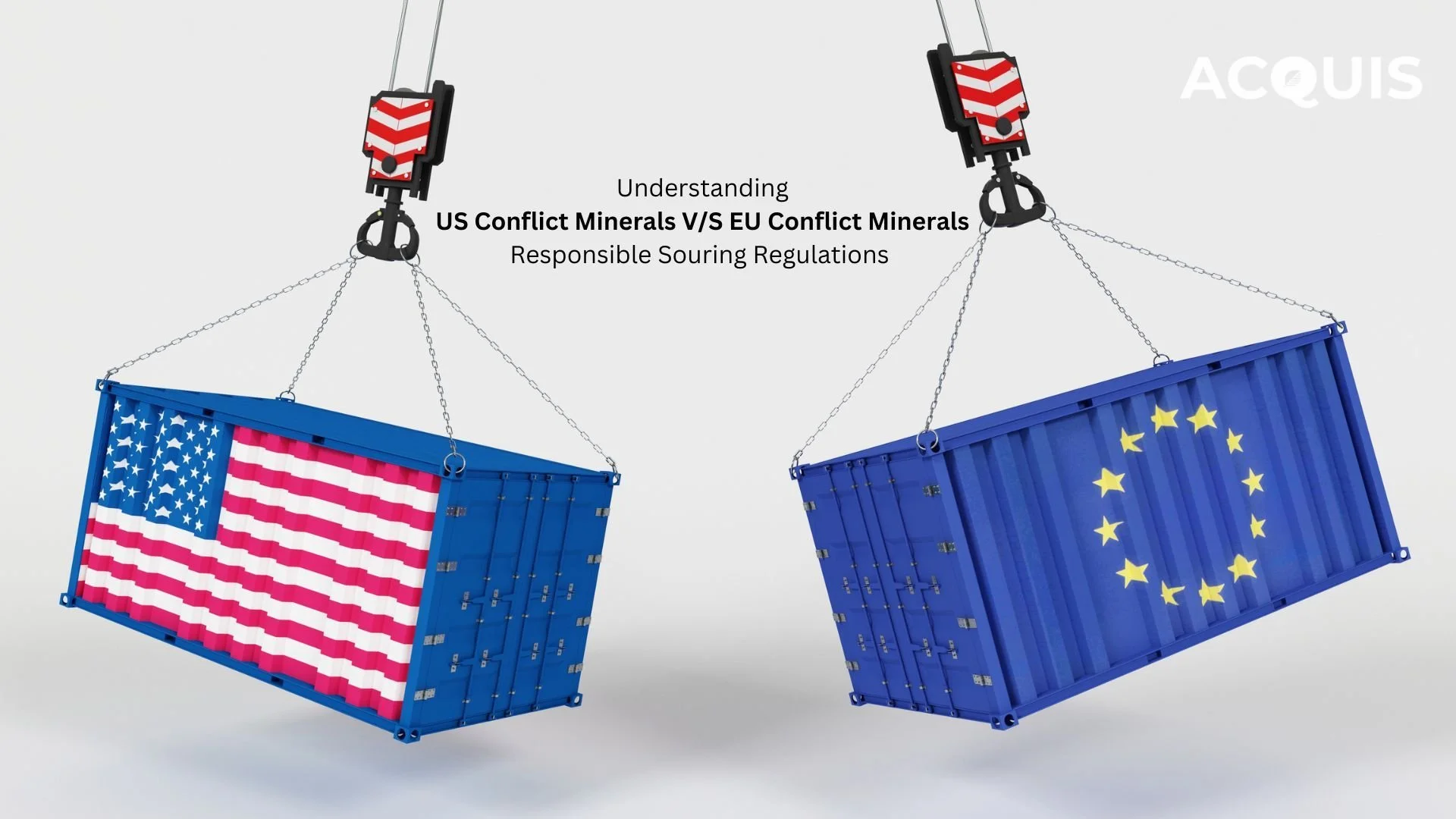
Although not an environmental agency, the WTO influences agrochemical standards through its Sanitary and Phytosanitary (SPS) Agreement. This agreement allows countries to set their own protection standards but requires them to be science-based and not constitute disguised trade restrictions.
Codex MRLs serve as the reference for judging the legality of national measures. If a country imposes stricter MRLs than Codex, it must provide a scientific risk assessment justifying them. This creates tension between the precautionary principle (applied by the EU) and the risk-based approach (favored by agricultural exporters).
The EU-US dispute over hormone-treated beef illustrates how the WTO can invalidate bans based on public perception or excessive precaution if solid scientific evidence is lacking.
Source: Acquis Compliance
International fragmentation
Despite these efforts, numerous obstacles remain, such as the institutional fragmentation: Scattered responsibilities across multiple bodies hinder regulatory coherence or the technical and economic asymmetries. Many developing countries lack capacity for independent risk assessments, making them dependent on international standards that may not fit their realities.
Coming from industry influence where agrochemical industry lobbying can delay or weaken regulations, especially where scientific evidence is disputed (e.g., glyphosate), to the lack of viable alternatives like banning agrochemicals without offering affordable, effective options for farmers generates socioeconomic resistance.
Yet the development of international standards for agrochemical use faces a fundamental paradox. The risks associated with these substances are global and cross borders, including environmental contamination, food residues, and impacts on human health. The regulatory architecture remains fragmented, slow, and often insufficient to address the scale of the challenge.
Obstacles include disparities in technical capacity, the influence of economic interests, and conflicts between trade and environmental protection. These have prevented the creation of a coherent and effective system. However, growing global awareness of the biodiversity crisis, soil degradation, and the rights of rural communities has driven an active search for innovative solutions.
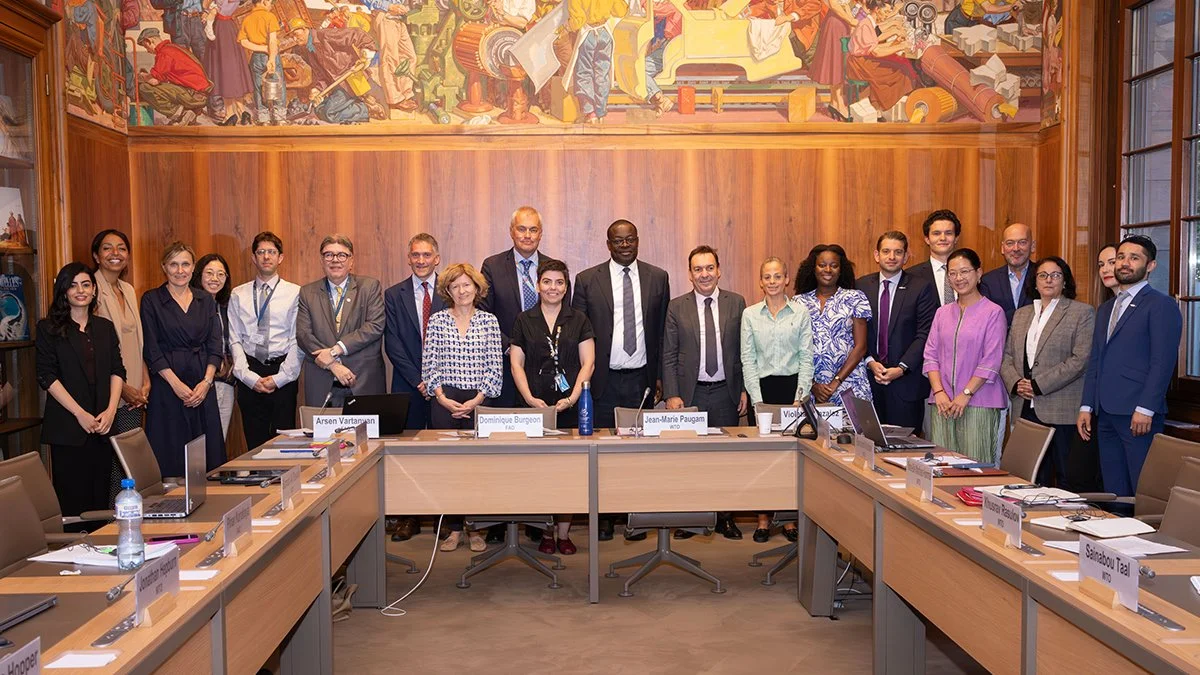
The current fragmentation among international organizations such as FAO, WHO, UNEP, WTO, and Codex generates duplications, regulatory gaps, and contradictory messages, leading to a misunderstanding of laws where the clear solution lies in creating formal coordination mechanisms.
Source: FAO archives
Window of opportunity
Developing international standards for agrochemicals is a complex puzzle. Progress requires stronger cooperation among FAO, WHO, UNEP, and WTO; closing capacity gaps through financial and technical assistance; transparent processes and independent science; and investment in sustainable alternatives (agroecology and integrated pest management).
Harmonization does not mean uniformity, but building a minimum floor of protection based on the precautionary principle and environmental justice.
One proposal is to establish a high-level coordination platform with technical and political representation from all relevant agencies. This platform would harmonize agendas, share data, and develop common positions. It could issue joint recommendations on highly hazardous substances, preventing a product banned under the Stockholm Convention from still being recommended for specific uses in other forums.
Another solution is to harmonize risk assessment processes by developing a single global protocol for evaluating agrochemicals, based on OECD guidelines but adapted to different agricultural and ecological contexts. This would reduce the regulatory burden on industry and allow countries with fewer resources to rely on assessments conducted by independent international scientific panels rather than those provided by manufacturers.
Additionally, integrating the Rotterdam and Stockholm Conventions could accelerate the listing process. For example, identifying a product as a persistent organic pollutant under the Stockholm Convention could automatically trigger its inclusion in Annex III of the Rotterdam Convention, without a separate review process.
Between being developed and developing a country
The asymmetry in technical and financial capacity is one of the biggest obstacles to effective implementation of international standards. Solutions must be structural and long-term.
A dedicated multilateral fund, administered by UNEP and FAO, could specifically strengthen national regulatory agencies in low- and middle-income countries.
A global digital platform using artificial intelligence could allow regulatory authorities to share real-time data on poisoning incidents, residue monitoring results, and regulatory decisions. This would reduce information asymmetry and enable faster responses to emerging risks.
Mentorship programs could also be established where high-capacity regulatory agencies, such as the US EPA or the EU's EFSA, mentor developing agencies, providing ongoing technical assistance and access to scientific databases.