
The Regional Political Shift in the Balkans: Populism, Sovereignty, and Recalibration
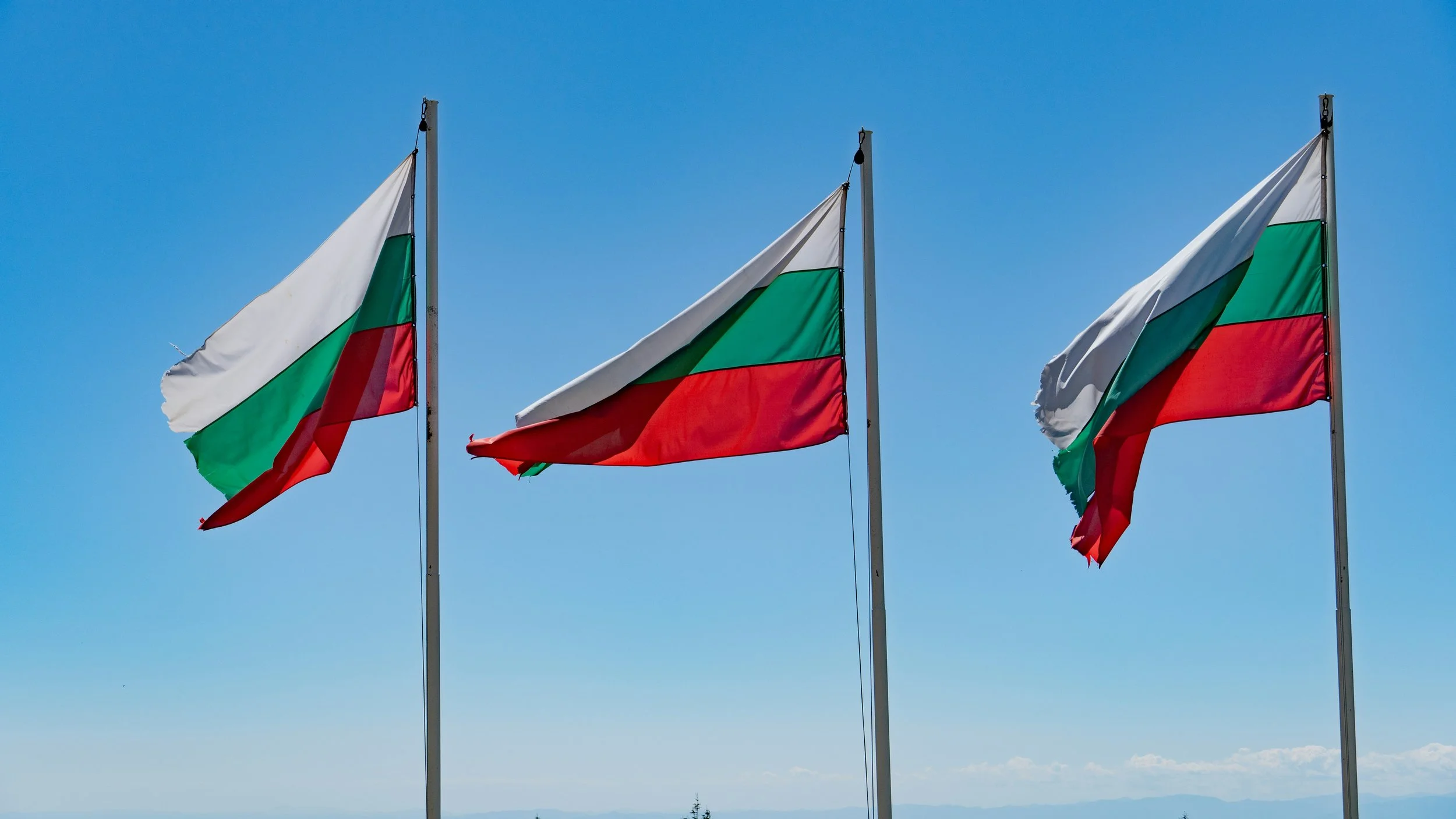
Source: Luba Ertel
The Balkans are entering a new political phase defined less by instability than by transformation. Recent developments in Bulgaria highlight a broader regional shift in which long-standing party systems are being challenged, public frustration with governance is intensifying, and new political actors are consolidating power in unprecedented ways. The return of Rumen Radev to the center of political life reflects these dynamics, offering a lens through which to understand how questions of sovereignty, legitimacy, and European integration are being renegotiated across Eastern Europe.
The Moment That Changed the Trajectory
Something decisive has happened in the Balkans—and this time, it cannot be dismissed as another episode of political instability. The April 2026 parliamentary elections in Bulgaria did not simply reshuffle power; they broke a cycle. After years of fragmented coalitions and institutional paralysis, Radev returned to politics not as a symbolic figure but as a system-defining actor.
His newly formed party, Progressive Bulgaria, secured roughly 44–45% of the vote and an outright parliamentary majority, ending five years of chronic instability and repeated elections (Reuters reporting). This is the first time in decades that a single political force has governed Bulgaria without coalition dependency—a fact that matters far beyond Sofia.
The key question is no longer whether the Balkans are changing. It is what kind of political order is emerging in their place.
Populism Has Won—But Not in the Way Brussels Expected
The victory of Progressive Bulgaria confirms something many European policymakers have been reluctant to admit: populism in the Balkans is no longer insurgent—it is institutional.
Radev did not win by rejecting the system outright. He won by absorbing dissatisfaction into the system itself, transforming anti-elite rhetoric into governing legitimacy. His campaign—centered on corruption, inequality, oligarchic governance, and anti-corruption demands—was not radical in content but radical in resonance. It spoke to a population exhausted by political repetition without reform.
And this is where the Balkan case becomes uncomfortable for the EU narrative. Leaders such as Aleksandar Vučić or Viktor Orbán are often framed as deviations from democratic norms. But Radev’s success suggests something deeper: the demand for political alternatives is not marginal—it is majoritarian.
What we are witnessing is not a collapse of democracy, but a shift in what democracy is expected to deliver.
The Collapse of the Old Party System
Perhaps the most striking outcome of the 2026 elections is not Radev’s victory itself, but the collapse of the traditional political architecture.
The long-dominant GERB party and pro-European coalitions were reduced to marginal roles, each hovering around 12–13% of the vote (Robert Schuman Foundation analysis). Even more symbolically, legacy actors like the Bulgarian Socialist Party failed to remain politically relevant, falling below the parliamentary threshold (El País reporting). This is not an electoral fluctuation. It is a systemic replacement.
For years, Bulgarian politics was defined by a binary: pro-European technocracy versus corrupt patronage networks. That binary has now collapsed. Radev’s movement occupies a third space—anti-oligarchic, socially interventionist, and moderately Eurosceptic, but not anti-European. That ideological hybridity is precisely why it works.
Europe Is No Longer the Destination—It Is the Arena
The European Union has not disappeared from Balkan politics, but its role has fundamentally changed. It is no longer the unquestioned endpoint of political development. It is now a field of negotiation.
Radev embodies this shift with unusual clarity. He does not propose exiting the EU or NATO. On the contrary, he explicitly maintains Bulgaria’s commitments to both. Yet at the same time, he openly criticizes EU policy—particularly on sanctions and the war in Ukraine (Polish Institute of International Affairs). This duality is not a contradiction. It is a strategy. Across the Balkans, the logic is becoming consistent: stay inside the system, but renegotiate its terms. Integration is no longer about compliance; it is about leverage.
A More Autonomous Balkans? Not Quite—But Something Close
The immediate temptation is to interpret these developments as a geopolitical “drift” toward Russia or China. That reading is too simplistic. What is emerging instead is a form of strategic pluralism. Bulgaria under Radev is unlikely to abandon its Western alignment, but it will almost certainly pursue a more flexible foreign policy—questioning sanctions and recalibrating its external positioning (European Policy Centre analysis).
This places Bulgaria in an increasingly familiar Balkan position: not aligned against the West, but no longer fully aligned within it either.
Stability, Tension, and a Test for Europe
Radev’s victory has, at least temporarily, solved one of Bulgaria’s most persistent problems: instability. After eight elections in five years, the emergence of a single-party majority provides a rare opportunity for coherent governance. But stability does not equal clarity.
Three scenarios now define Bulgaria’s—and arguably the Balkans’—near future:
First, a reformist scenario. If Radev successfully translates anti-corruption rhetoric into institutional reform, Bulgaria could become a model of post-populist consolidation.
Second, a stagnation scenario. Structural constraints—corruption, weak institutions, and political fragmentation—remain deeply embedded (LSE analysis of party system instability).
Third, a confrontation scenario. While unlikely in the short term, tensions with the EU could escalate as Bulgaria adopts more assertive positions on foreign policy and governance norms.
The most probable outcome lies somewhere in between: a pragmatic but assertive Bulgaria, testing the limits of European integration without fully breaking from it.
Conclusion: The Balkans Are No Longer Waiting
The 2026 Bulgarian elections mark more than a national turning point—they crystallize a regional trajectory. The Balkans are no longer passively integrating into a predefined European model. They are actively reshaping their position within it.
Rumen Radev is not the architect of this shift, but he is its clearest expression. His rise reflects a broader recalibration in which sovereignty, legitimacy, and governance are being renegotiated simultaneously.
For the European Union, this presents a dilemma. The old approach—conditionality, gradual integration, normative pressure—assumes a region moving toward convergence. That assumption no longer holds.
The Balkans are not diverging. They are redefining the terms of convergence itself.And this time, they are doing it on their own terms.