
Electrifying the EU amid energy crises
The Iran energy crisis and global oil markets
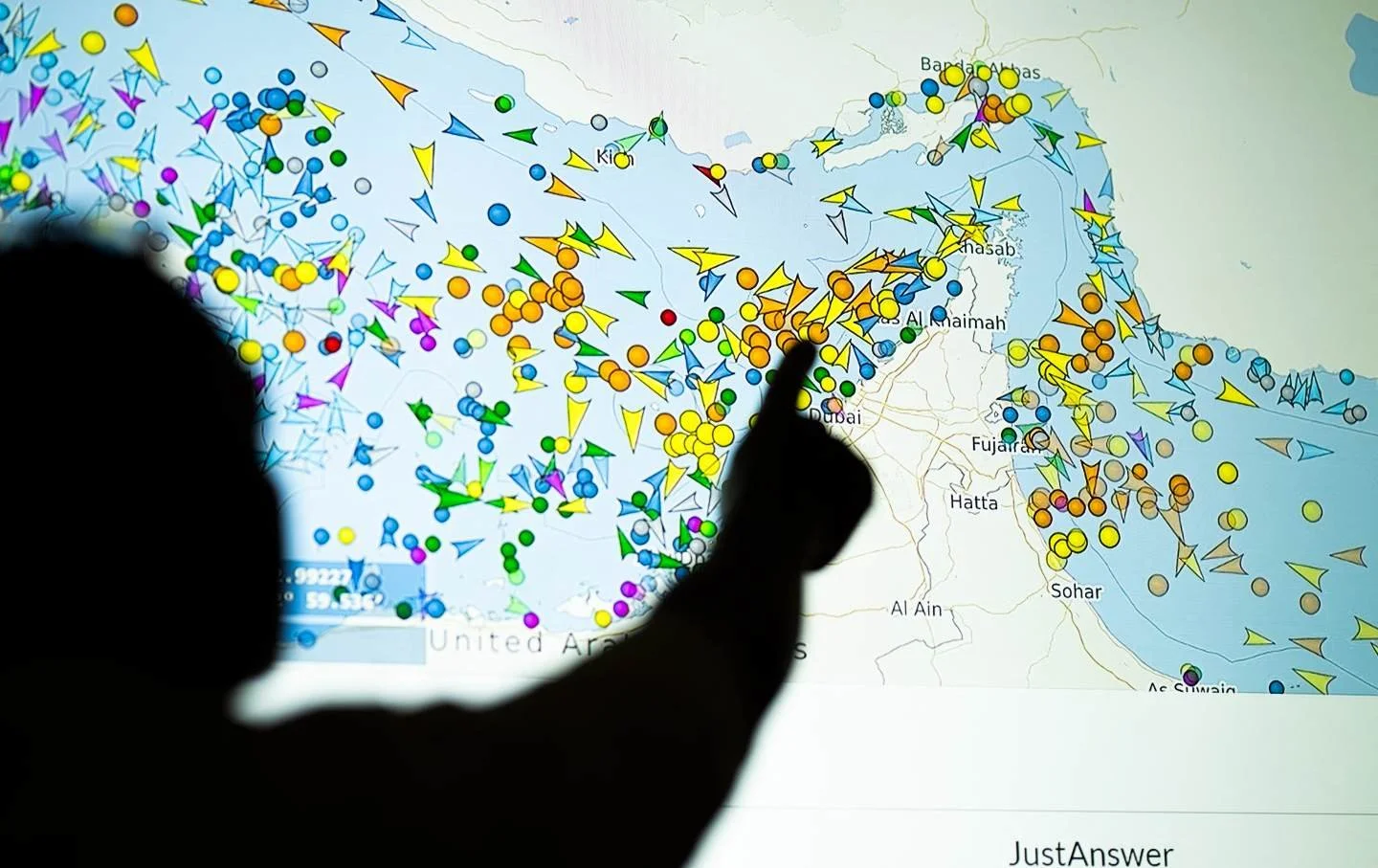
Iran’s closure of the Strait of Hormuz was described as the largest supply disruption in the history of the global oil market by the International Energy Agency. Global oil prices jumped to the highest levels since Russia's invasion of Ukraine in February 2022 and have not returned to their pre-war $70-per-barrel level. The crisis deprived the market of 20 million barrels per day (mb/d) of crude and oil products. To contextualize the magnitude, the amount of oil lost was larger than that of the oil shocks of the 1970s and 2022 combined. The war in Ukraine, for instance, reduced oil supply by only around 1 mb/d, since Russian oil production continued to flow on world markets despite the sanctions.
To absorb the shock, the IEA coordinated the release of 400 mb of oil in March, the largest drawdown of oil reserves in history. The 32 member countries of the IEA agreed to jointly release oil from their emergency reserves, whose levels are required to be equivalent to at least 90 days of the previous year's net imports as per IEA membership conditions. The coordinated stock release was the sixth since the creation of the IEA in 1974, after previous collective actions in 1991, 2005, 2011, and twice in 2022. That year, the IEA coordinated the drawdown of more than 180 mb of oil, which was the largest collective release at that time.
Since only OECD member states may join the IEA, the countries involved in the coordinated release included the most advanced economies but not China, which holds the largest oil reserves in the world. Indeed, at the end of 2025, China’s strategic oil inventories stood at 1,541 mb of oil. The United States had the second-largest reserves with 413 mb, followed by Japan with 263 mb and OECD Europe with 179 mb. When the U.S.-Israeli war with Iran broke out, China’s oil reserves were larger than the 1.2 billion barrels held by all of the IEA member states combined.
While China relies on oil imports for most of its supply, the country was much better prepared for emergencies than other advanced economies. China does not disclose its strategic oil reserves, and the country’s oil import data are quite opaque. However, according to analyst estimates, the country continued to build its stockpile of crude oil in March, reaching a surplus of 1.74 mb/d. Then China began to cut drastically the amount of oil it imports. China’s crude imports were 15% lower in April and 40% lower in May and June compared to pre-war levels. The country drew from commercial and corporate stocks to meet its large domestic demand.
Although emergency oil stocks are held by national governments, the European Commission coordinated the responses to ensure a unified approach. The EU bloc contributed 92 MB to IEA’s coordinated release, or about 20% of the total. The largest contributors from the EU were Germany (19.5 mb), France (14.6 mb), Spain (11.6 mb), and Italy (10 mb). These reserves were estimated to last around 5 months. By July, 290 mb of oil had been released by member countries. The coordinated oil reserve release helped global markets absorb the loss in supply of over a billion barrels of oil since the start of the closure of the Strait of Hormuz. Nevertheless, other factors played a role in containing price spikes. Notably, Saudi Arabia and the UAE diverted their exports through multiple alternative routes. More importantly, China significantly curtailed its crude oil consumption, as mentioned above. This behavioral change significantly reduced upward pressure on prices and prevented oil prices from spiking much higher. Thus, until now, oil prices have remained relatively contained, considering the scale of the disruption.
Notwithstanding this, with the war in Iran dragging on and spiraling into prolonged regional conflict, as seen with the hostilities between Yemen’s Iran-aligned Houthis and Saudi Arabia, global energy prices are poised for further escalation. Moreover, China is decidedly restricting exports of refined petroleum products, which risks squeezing global energy markets even more. Since their decrease in July, oil prices have surged again and presently hover around $100 a barrel.
EU energy security and competitiveness
The occurrence of two energy crises in less than five years underscored Europe's vulnerability to the disruption of fossil fuel supplies. It reignited a policy debate that arose in 2022 concerning the EU's energy security and dependence on external suppliers. As 57% of energy consumed in the EU is imported fossil fuel, the block has yet to solve its energy dependency and sensitivity to volatile fossil fuel markets.
As the main policy response to the 2026 energy shock, the Commission introduced the AccelerateEU package in April. AccelerateEU put electrification at the heart of the EU’s energy resilience strategy. The package is less of a short-term relief program than a roadmap for future actions to strengthen EU energy resilience in the long term.
Consequently, the Commission appears to favor doubling down on electrification as a means to hedge the EU against energy price spikes. The reason for this lies in the lack of progress achieved in this policy agenda. The rate of electrification in the EU has stagnated for the past decade, standing at 23.23% in 2014. In addition, while the EU is generating almost half of its electricity from renewables, the share of electricity in final energy consumption remains meager. In 2024, electricity made up only 23.45% of the total energy consumption.
The transport sector tops the EU’s electrification priorities. The sector’s electrification rate is only 2%, with electrified rail accounting for most of it. Road transport remains almost exclusively petroleum-powered. Passenger cars are responsible for more than half of the EU transport sector’s emissions, which alone generates almost one-third of total EU greenhouse gas emissions. Accordingly, the adoption of electric vehicles is the most direct way to cut the sector’s emissions. The EU has adopted a regulation requiring all new vehicles to be zero-emission by 2035. Still, it will take several more years for the existing fleet of fossil-fuel vehicles to be completely phased out.
AccelerateEU has been presented as a step to solve the bloc’s energy trilemma between economic, environmental, and security objectives, providing measures that advance competitiveness, energy efficiency, and decarbonization simultaneously. The framing highlights the language shift taking place at the EU level from climate obligation to national interest underpinning the political rationale for renewables. This strategic communication was already visible prior to the Strait of Hormuz crisis, notably with the European Green Deal, approved in 2020. But the 2026 energy shock has reinforced the rebranding of the EU green agenda into a blueprint for security and competitiveness. As such, what was initially intended as a framework to position Europe as the first climate-neutral continent became a plan to make the EU a leading resilient economic powerhouse.
In sum, about half of the proposed actions in the AccelerateEU package focus on ramping up clean energy or expanding electrification across the EU. Even so, the decision about which of these policy options to adopt will be up to member states. As member states control the levers of economic, energy, and fiscal policies, the Commission’s ability to implement measures is limited. Accordingly, the focus of the proposal is on coordinating measures and general guidelines to avoid fragmentation of national energy policies in the EU.
Furthermore, the amount needed in investment will likely represent a challenge in and of itself. AccelerateEU underlines that public funds alone will not suffice to meet the investment needs of the energy transition, which are estimated at €660 billion per year until 2030 and €695 billion annually between 2031 and 2040. The initiative builds upon the Clean Energy Investment Strategy released by the Commission in March, which seeks to improve access to capital markets for electricity grid operators, de-risk clean energy investments with targeted public funds, and ensure public policy is aligned with investor needs.
The electrification imperative
The Strait of Hormuz crisis generated calls for more structural changes to foster energy security, competitiveness, and decarbonization. Indeed, Europe’s electricity prices are about 50% higher than in China and more than twice those in the United States. These prices leave energy-intensive industries at a disadvantage when trying to remain competitive against Asian and North American rivals. Other rapidly expanding electricity-hungry sectors like artificial intelligence and data centers are also likely to add further pressure on European electricity prices. Therefore, electrification in the EU policy debate has turned from climate ambition to economic necessity. Other authoritative voices, like the International Energy Agency's chief, Fatih Birol, argued that electrification is the solution to save European industry.
Investments in renewable energy have not been accompanied by proportionate grid upgrades and expansion for a sustained electric power distribution. Aging European grids cannot absorb the growing supplies of intermittent renewable energy power. Consequently, wind and solar electric output is often restrained to avoid overloading networks, thereby limiting renewables’ generation potential. The construction of new electrical grids has been more like an obstacle course. For instance, permits for grid projects under the current system can take as long as 10 years to be granted. Moreover, the EU energy infrastructure is still a fragmented system of national planning rather than an EU-wide integrated network.
The Commission’s plan for an electrification strategy arose before the 2026 energy shock. The long-awaited policy roadmap was delayed twice and announced for July at the beginning of 2026. From the onset, the electrification strategy seemed destined to be carried out with significant political struggle. In late June, the EU energy ministers concluded their negotiations of the European Grids Package released in December 2025 by the Commission. The grids package and the electrification strategy are two sides of the same policy coin. However, the Council rejected the Commission’s push for centralized control over cross-border infrastructure funding.
By restricting centralized funding, the EU energy ministers’ decision forces a pivot toward mobilizing private capital to bridge the €1.2 trillion grid investment gap required by 2040. In an effort to entice investors, the Council consented to grant grid infrastructure an overriding public interest status, which would drastically shorten approval timelines in a sector notorious for red tape. The compromise reached by the Council risks slowing down the development of an integrated pan-European grid. Cross-border interconnectors are needed to distribute electricity from peripheral renewable energy hubs to consumption hotspots, whose complexity might deter private developers in the absence of a public guarantor.
Hot on the heels of negotiations on the European grid package, the Commission published its electrification action plan in July. It set out to increase electricity's share of final energy consumption to 32% by 2030 and 46% by 2040. The Commission aspires to turn Europe into the world's first "electro-continent," thereby cutting the EU’s fuel import bill by as much as €260 billion a year by 2040. To that end, it aims to address Europe's biggest energy paradoxes, whereby the cost of electricity is often superior to that of fossil fuels. The plan also recommends speeding up the implementation of the electricity grid plan to support electrification in the EU.
At the national level, electrification has not been a primary focus in member states’ crisis response. Among the 23 EU countries (excluding Finland, Malta, Denmark, and Luxembourg) adopting collectively 210 emergency measures to date, only 7 (Croatia, Estonia, France, the Netherlands, Portugal, Spain, and Sweden) included measures supporting electrification. The total spending allocated to electrification by member states amounts to roughly €2.5 billion, with Spain alone accounting for more than half of the spending. In consequence, according to estimates, electrification components constitute only 15% of crisis spending by EU countries.
Still, the 2026 energy shock has increased the public approval of the green transition. A survey of six European countries conducted in March shows that 60% wanted the EU to either speed up or maintain its green transition. Moreover, the largest block of respondents (39%) favored accelerating the transition to renewables even at the cost of temporarily paying higher bills. The survey revealed that most voters support a more self-reliant energy strategy at the EU level. Nevertheless, the public opinion is not uniform across the EU. The findings suggest that people in countries where energy prices surged, like Italy and Germany, are more enthusiastic about renewables than people in countries less hit by the energy shock, such as Spain and France (with Poland as an outlier).
Conclusion
The EU's energy transition is more than ever connected to the bloc's industrial agenda. After repeated energy crises, energy transition went from a foundation of climate goals to a pillar of economic competitiveness. In this context, electrification, and the grid expansion underpinning it, are indispensable to reduce exposure to fossil fuel volatility. The transition to a clean, electrified economy will, therefore, simultaneously deliver on climate commitments and lay the foundations for the bloc's economic growth in the coming decades. That said, it will only come to fruition if tangible actions are taken to remove bottlenecks, scale up green investments, and integrate national networks into resilient power systems.