
The failure of the Federal Republic of Central America and its influence on the modern states of the region
The Federal Republic of Central America was one of the earliest attempts to construct a unified political entity in the aftermath of Spanish colonial rule. Although its existence was brief, the Federation became an important case study in the political, social, and economic dynamics that shaped XIX Latin America. Its formation was motivated by a desire to create stability, protect territorial sovereignty, promote economic development, and establish a democratic political order. At the same time, its collapse exposed the contradictory forces at work within the new republics of the region. These included the tension between central authority and provincial autonomy, the influence of colonial social hierarchies, and the inability of political leaders to reconcile competing visions of governance.
Historical context
Following independence in 1821, the Central American provinces briefly joined the Mexican Empire of Agustin de Iturbide. This arrangement ended in 1823 when the empire collapsed. Central American leaders then opted to form an independent federal republic. Their decision reflected both practical considerations and ideological commitments. A unified region was believed to be more capable of resisting foreign interference, attracting investment, and promoting internal development. It was also consistent with liberal political ideas that were gaining influence across the hemisphere.
The first years of the Federation were shaped by liberal ideas regarding political organization and economic modernization. Leaders sought to introduce new legal frameworks, reorganize administrative institutions, and reduce the influence of colonial social structures. Reformers promoted the separation of church and state, the expansion of public education, and the creation of a more open market economy. These reforms were ambitious, but they were implemented within a context that lacked the stable institutional foundations required for long-term success.
Structural obstacles to unity
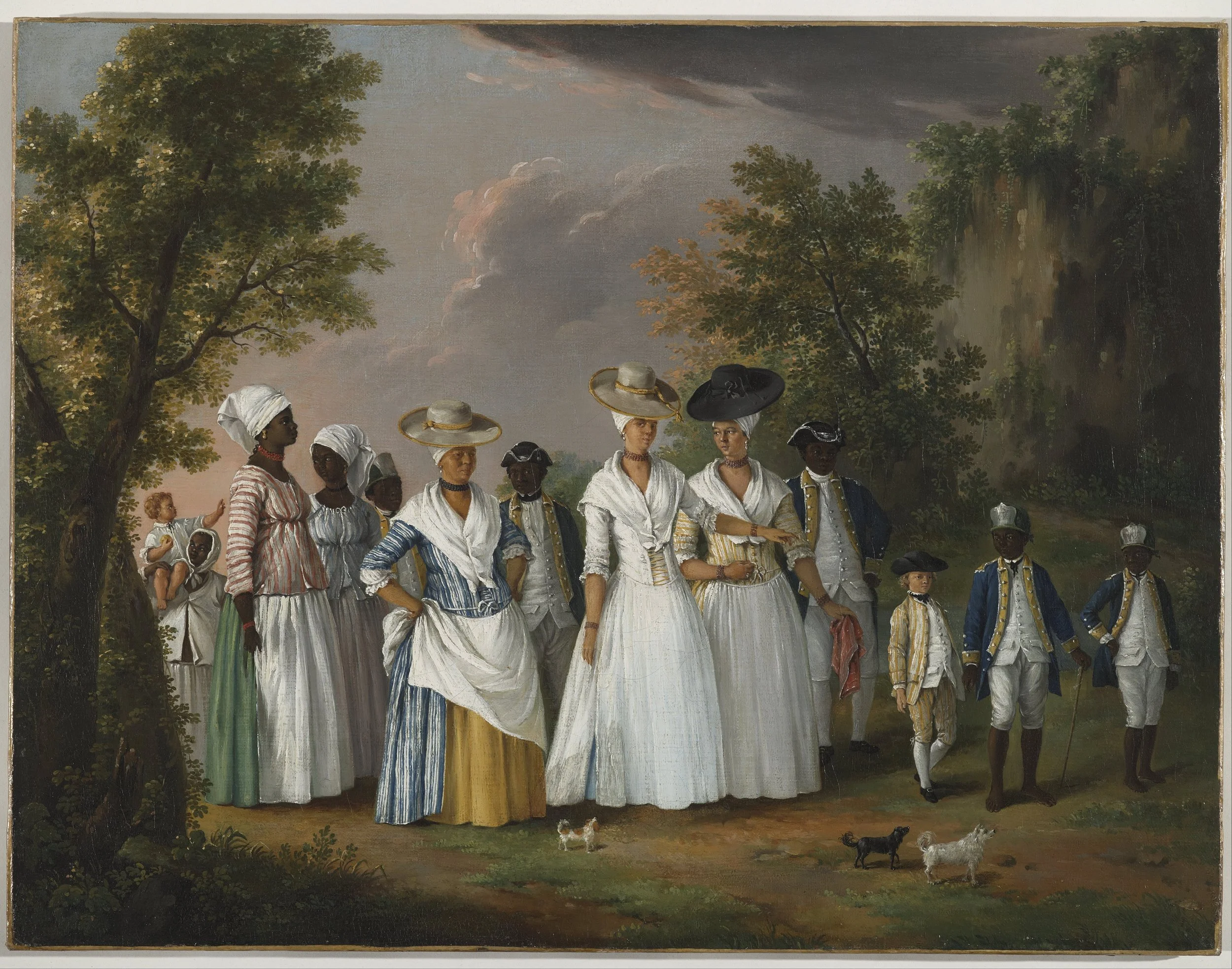
The prolonged period of colonization had given rise to new groups of social and political power that, with the establishment of the Republic, aspired to achieve independence from Spain to consolidate their political and economic control over the region. This power was particularly reflected in the control of land, natural resources, and trade, as well as in maintaining its privileged position within the social structure inherited from the colonial order. The people who gained power upon independence, made up of descendants of the Spaniards born in the new continent, were called the "criollos" (Creoles). The Creoles, who represented 20% of the population, made an effort to separate their lineage from the rest of the population, which represented the remaining 80%. This concentration of power laid the foundations of a political system where the Creoles could impose their interests, limiting the participation of the rest of the population and shaping the structures of the new state.
The Creole’s unrestricted access to power through independence gave rise to a new dynamic in independent governments, whose first actions clearly reflected their priorities and aspirations. During the three centuries of domination, the colonies maintained a relationship of economic dependence on the metropolis. This economic relationship was based on the mercantilist system, which sought to accumulate the wealth sent to the Spanish crown from exploitation of the foreign land and indigenous labor. When the Creoles came to power through the independence of the Republic, they perpetuated the entrenched system of economic exploitation.
Newly accessible foreign trade was mainly concentrated in the hands of the Creole elites, who maintained power over the means of production and trade routes. Meanwhile, the rural communities composed of indigenous peasants and mixed people (“mestizos”) continued to be marginalized from economic growth, limited to agricultural work, and subject to conditions of inequality inherited from the colonial period. The end of slavery, the opening to free trade, and the socio-economic situation of the Creoles did not change the relationship between lord and peasant, which continued to be marked by abuses of power. In this way, free trade, while symbolizing modernization and progress, also consolidated the social and economic gaps within the Federal Republic, reinforcing the power of the elites and weakening the internal cohesion of the new state.
Inherited colonial systems, reflected in the economic structures and interests of local elites, represented one of the main obstacles to the full development and duration of the new state. The regional elites, deeply marked by the privileges and hierarchies of the colonial period, had fragmented interests and a limited vision of the common good, prioritizing the defense of their local economies and their positions of power. Indeed, although the period of colonization came to an end, the mechanisms of power and accumulation of wealth established over three centuries by the Spaniards remained intact. The difference was that, in this new stage, these mechanisms passed into the hands of the descendants of Europeans: the Creoles, who consolidated themselves as the new dominant social group. Although the Creoles managed to establish themselves as the new elite during the federation, this group was deeply fragmented by divergent provincial interests and economic agendas.
The absence of an elite with a national vision and the predominance of provincial interests prevented the consolidation of a unified state. This political fragmentation resulted in the existence of different local governments that acted with broad autonomy, responding more to the interests of their own provinces than to a common federal project. Although there was a federal government based in Guatemala, each member state, such as El Salvador, Honduras, Nicaragua, Costa Rica, and Guatemala itself, had its own state government, with its own institutions, laws, and authorities, which reinforced internal divisions and weakened central authority.
Guatemala, on the one hand, tended to maintain a conservative profile, closely linked to the Church, the maintenance of traditional privileges inherited from the colony, and a centralized model of government, and was a more intransigent political approach. In contrast, El Salvador was configured as one of the emerging liberal bastions, with exporting agricultural elites, liberal merchants, and creoles who defended free trade, greater state autonomy, and less ecclesiastical intervention in political and governmental affairs. These conflicts of ideals between conservatives and liberals led to the failure of any effort to maintain regional unity. This dispute, whose roots went back to colonial times, continued to divide the Creole elites of the new republics.
The collapse of the Federal Republic
Despite the aspirations to form a unified Central American power, the conflicts inherited from the colonial period did not disappear with independence; on the contrary, they became more acute. The different visions of the direction that Central American society should take generated deep tensions between the new states. For this reason, the Federal Republic of Central America began to disintegrate gradually from 1837 onwards as a result of the irreconcilable conflicts between liberals and conservatives, as well as the deep economic discrepancies between the member states. Economic rivalry and differences of vision among the local oligarchies prevailed over the project of building a unified Central America. As a result, Nicaragua became the first state to secede definitively in 1838, followed by Honduras and Costa Rica, while Guatemala seceded in 1839, culminating in the total disintegration of the Federation in 1841.
The failure of a regional political union laid the foundations for each state, after the dissolution of the federal project, to consolidate itself under an autonomous political and economic model. In this process, the agricultural and export elites reinforced their power and established institutional structures that guaranteed their dominance, hindering the opening towards a participatory and representative democracy.
The experience of the Federal Republic of Central America, although brief and marked by internal conflicts, left deep traces that are still perceived in the region today. The tensions between liberals and conservatives, the fragmented economic interests of local elites, and the difficulty of consolidating a unified political project not only determined the dissolution of the Federation but also shaped the political, economic, and social structure of the states that emerged from it.
In this way, the elites took advantage of this context to consolidate an agro-export model, focused on coffee and other secondary products, which organized the economy and ensured the insertion of each republic in the world market, while legitimizing their authority and consolidating their political power. This model laid the foundations for an economic dependence on external powers by focusing on the export of raw materials and insertion into international markets controlled by foreign actors.
After the fall of the Federal Republic of Central America, this pattern was consolidated. The new republics were structured as independent states, but with export-oriented economies, mainly coffee and later bananas, which strengthened the influence of foreign interests and kept local elites as intermediaries within a scheme of economic dependence. In this way, the foundations of neocolonialism took root in the region, with repercussions that can still be observed in the productive organization and economic relations of contemporary Central American countries.
The long-lasting consequences
The fact that the new Central American republics maintained their agrarian economies and depended on foreign trade after the disintegration of the Federation influenced their industrial development. While Europe began to industrialize from the eighteenth century onwards, Central America maintained an economy based on the production and export of raw materials such as coffee and bananas, and not industrial manufacturing. The new republics experienced a heavy reliance on agriculture, rather than producing manufactured goods on a large scale.
From the creation of the Federal Republic of Central America to the present, the region has been marked by a constant social struggle in which different social groups have sought to transform the structures of political and economic power. The nature of the social struggles that qualify the Central American situation as one of deep political crises is the result of a long process of imbalances and problems generated by economic growth, as well as of permanently postponed demands and rights repeatedly violated.
In many ways, the Federal Republic’s brief existence foreshadowed both the challenges and aspirations that would characterize Latin America’s path toward sovereignty and democracy. It revealed the tension between unity and fragmentation, progress and inequality, autonomy and dependence, contradictions that remain at the heart of Latin American societies today. The legacy of the Republic lies not only in its historical significance as an early experiment in regional integration but also in the enduring questions it raised about identity, governance, and social justice. Its vision of unity, though unrealized, continues to inspire contemporary efforts toward regional cooperation and the pursuit of a more equitable and interconnected Latin America.